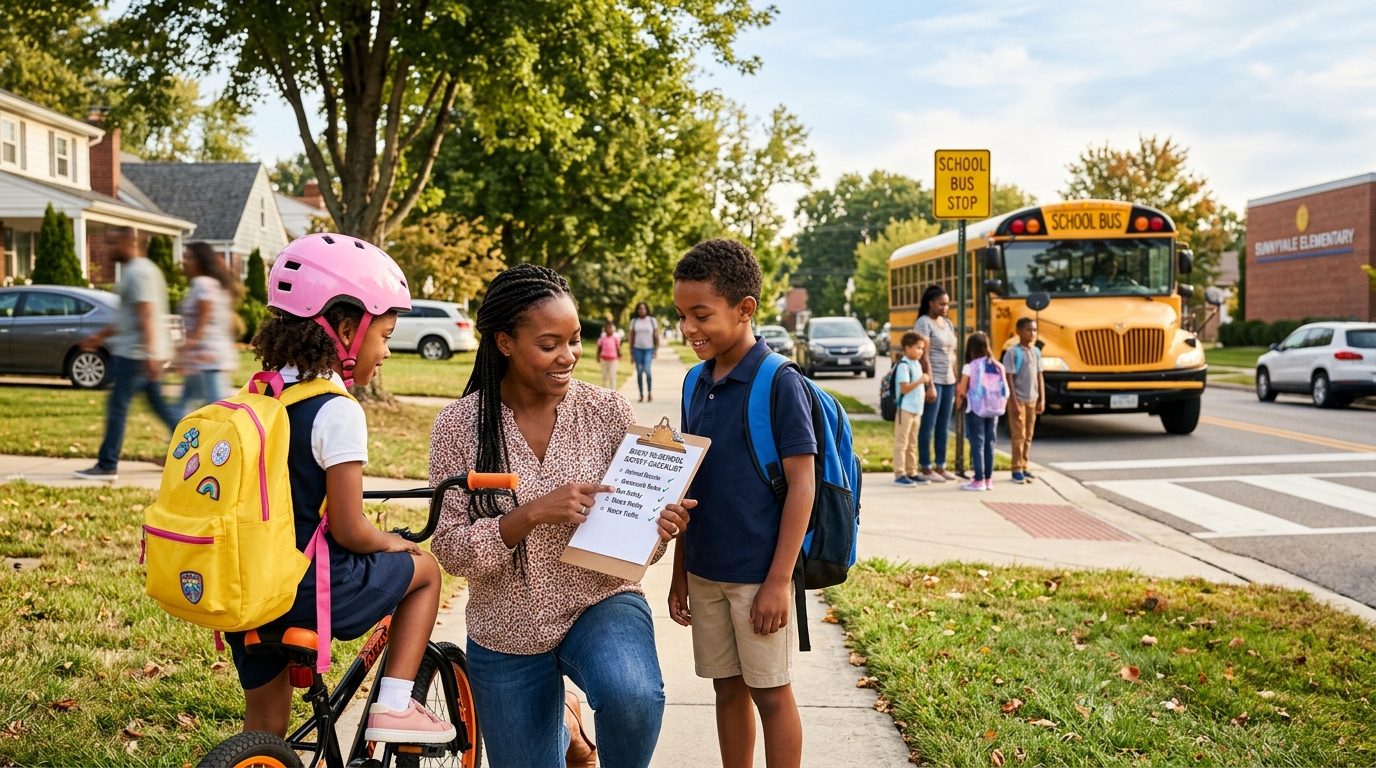
The start of a new school year changes a family’s daily rhythm almost overnight. Children may be riding a school bus again, walking or biking on busier streets, carrying new devices, spending more time away from home, and following pickup routines that have not been practiced for months. A practical back-to-school safety checklist helps parents and caregivers review those changes before they become part of the daily rush.
Back-to-school safety is especially timely in 2026. The National Highway Traffic Safety Administration continues to emphasize school bus, pedestrian, bicycle, and child safety as students return to classrooms, while families are also navigating newer issues such as e-bikes, scooters, smartphones, and AI-enabled schoolwork. Instead of trying to prepare for every possible situation, focus on repeatable habits your child can understand and use.
Use this guide as a starting point, then visit our Child Safety Checklists and Safety Topics pages for more focused guidance by age, setting, and activity.
Before the School Day Starts: Transportation, Gear, and Home Routines
A safer school day begins before anyone leaves the house. The goal is not to create a complicated morning routine. It is to remove avoidable confusion: children should know how they are getting to school, where they need to wait, who is allowed to pick them up, and what to do if the normal plan changes.
Parents should also match expectations to a child’s age and maturity. A first grader walking with an adult needs different rules from a middle-school student biking independently. Our Home Safety by Age resource can help you adjust responsibilities as children become more independent.
School Bus Safety Starts Before the Bus Arrives
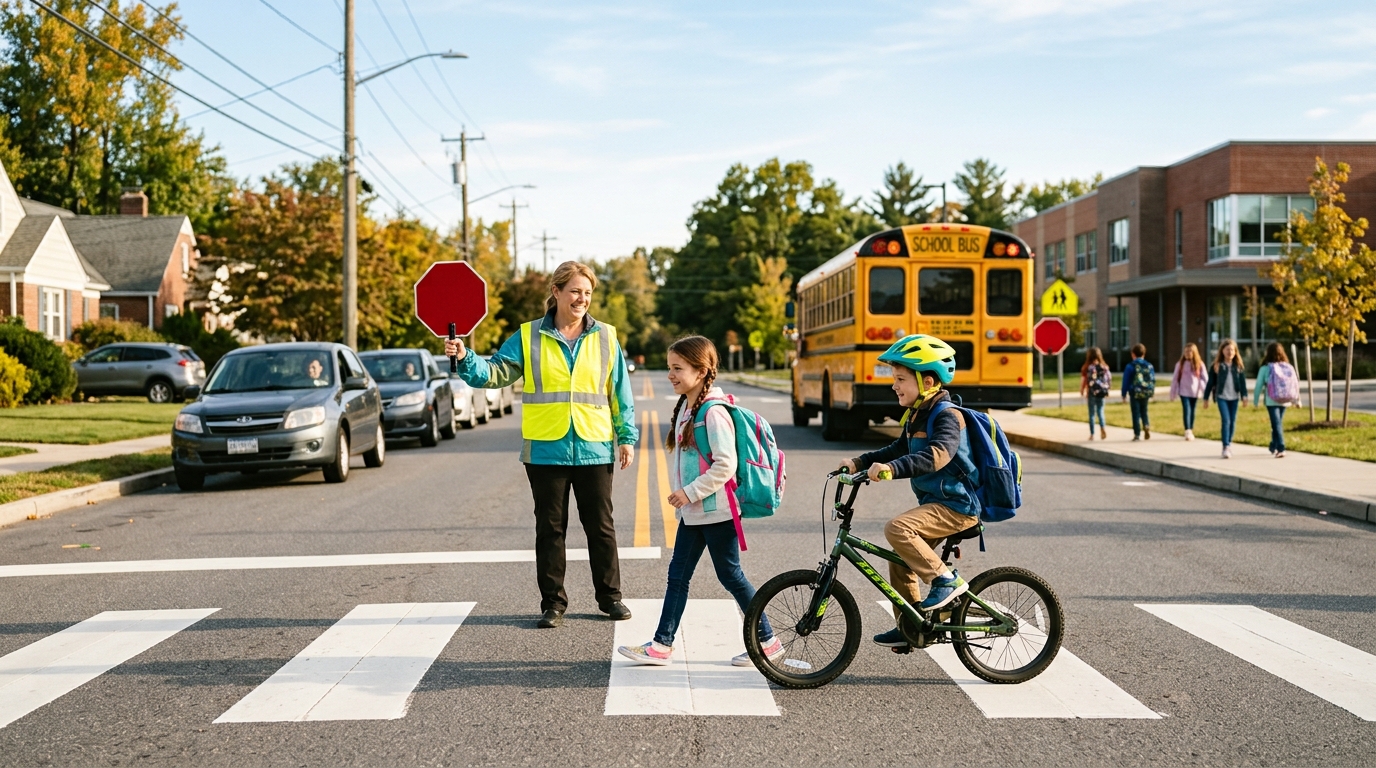
School buses are designed around student safety, but many risks occur outside the bus while children are waiting, approaching, or crossing nearby roads. NHTSA reminds drivers that flashing yellow lights mean a school bus is preparing to stop, while flashing red lights and an extended stop arm mean children are getting on or off. Parents can reinforce the same awareness from the child’s point of view.
At the Bus Stop
Choose a designated waiting location away from moving traffic. Children should arrive with enough time that they do not need to run toward an arriving bus. Younger children should be supervised according to their age, local conditions, and school procedures. Remind children that the bus stop is not a play area: pushing, chasing, and stepping into the roadway can become dangerous quickly.
Teach children to keep backpacks, jackets, and loose straps under control so nothing catches as they board. If they drop something near the bus, they should tell the driver rather than trying to retrieve it from an area where the driver may not see them.
Getting On and Off the Bus
Children should wait until the bus has fully stopped and the driver indicates it is safe to board. When leaving the bus, they should move directly to a safe location rather than lingering near the wheels or sides. If crossing is required, teach them to follow the driver’s instructions and confirm traffic has stopped before moving across the road.
Parents and teen drivers should review school-bus stopping rules before the first week of school. For additional official guidance, see NHTSA’s back-to-school child safety guidance.
Walking, Biking, and Micromobility Need Their Own Plan
Walking or riding to school can support independence, but the route should be reviewed rather than assumed to be safe because it is familiar. Construction, traffic patterns, parked vehicles, school drop-off lines, and seasonal daylight can change the conditions children encounter.
Walking and Crossing Streets
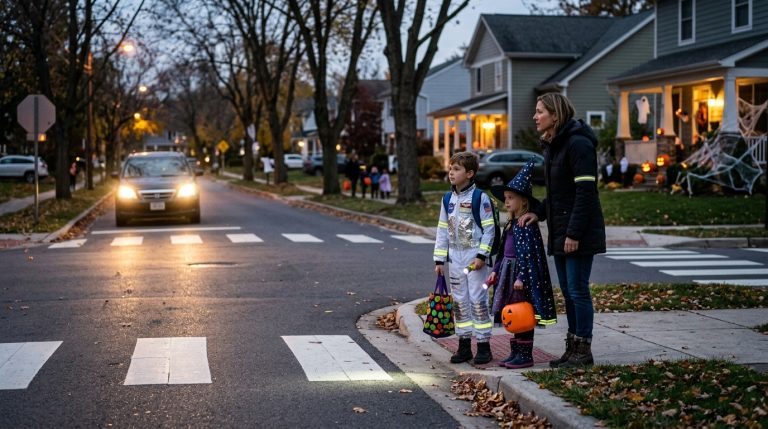
Walk the route together before school starts. Identify the safest crossings, sidewalks, crossing guards, and areas where visibility is limited. Children should learn to stop at the edge of the street, look carefully in both directions, listen for traffic, and continue watching as they cross. Phones and headphones should not compete for attention while crossing.
For younger children, avoid overestimating their ability to judge vehicle speed and distance. A child who can recite a road-safety rule may still need adult supervision to apply it consistently when excited, distracted, or late.
Bikes, E-Bikes, and Scooters
Every rider should use a properly fitted helmet and understand the local rules that apply to bicycles, e-bikes, and scooters. Check brakes, tires, lights, reflectors, handlebars, and the overall condition of the device before regular school use begins. Children should be visible, predictable, and focused on the road rather than a phone.
E-bikes and electric scooters also add battery and charging considerations. Use the charger specified by the manufacturer, avoid damaged or modified battery packs, and do not charge a micromobility device unattended while the household is asleep. Families considering these devices for school transportation should review age limits, local laws, route conditions, and the child’s actual riding skills before making them part of the daily commute.
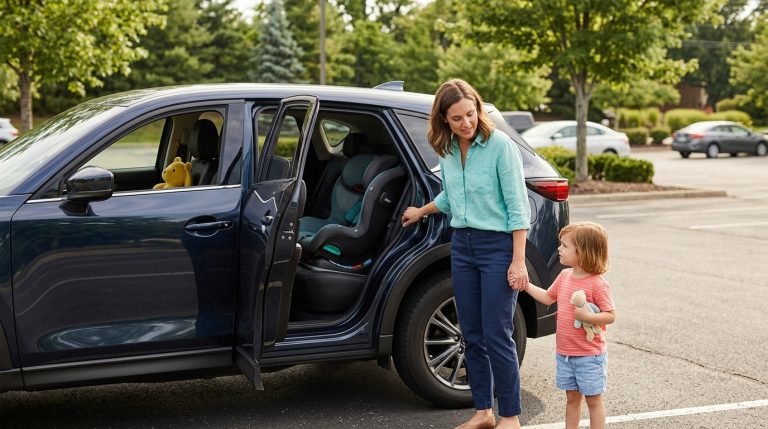
For broader transportation guidance, visit our Car Seat & Travel Safety hub.
After School and Digital Life: Pickups, Devices, and Emergency Plans
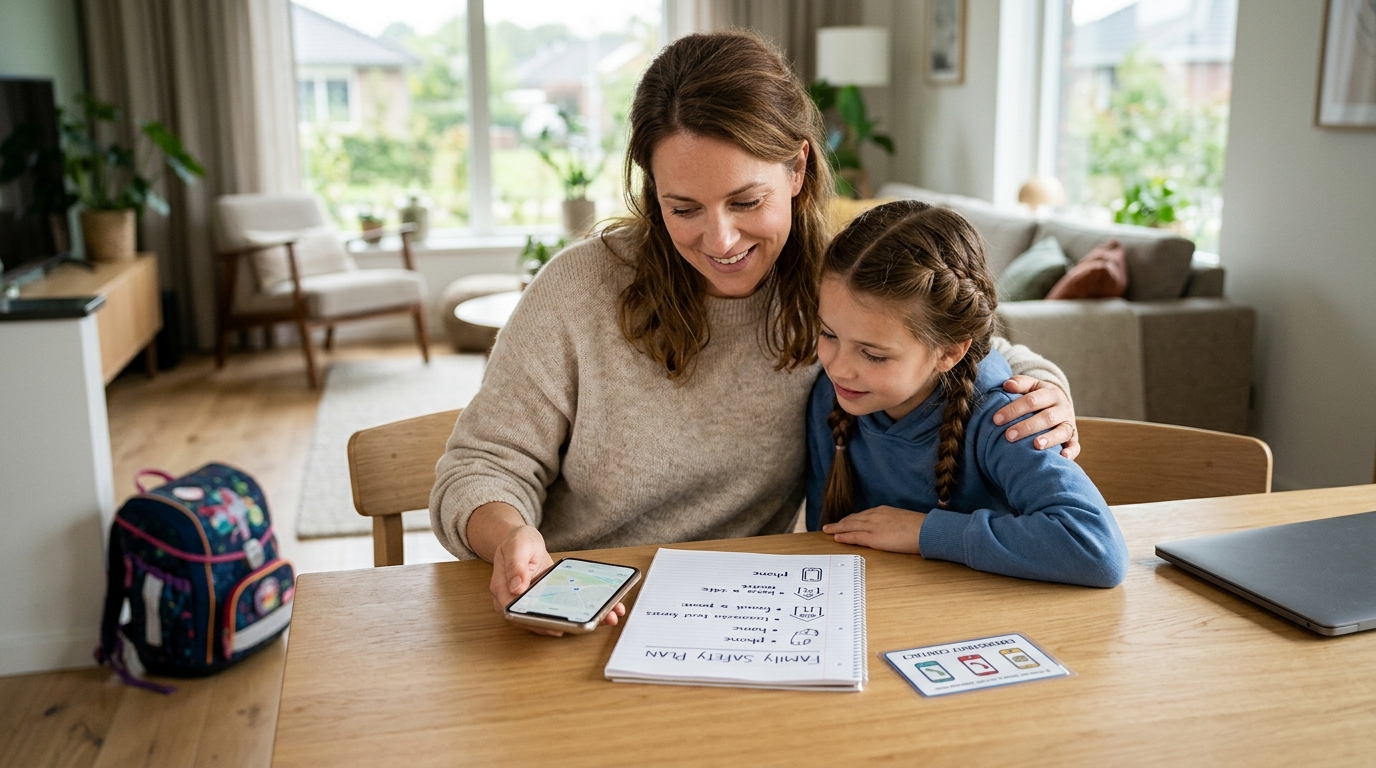
Back-to-school safety does not end when children reach the classroom. Afternoon pickup periods can be crowded and unpredictable, while after-school activities may introduce new adults, transportation arrangements, locations, and device use. A clear family plan reduces the number of decisions a child has to make under pressure.
Pickup, Online Safety, and Family Readiness Should Work Together
Create a short list of adults who are authorized to pick up your child and explain the plan in age-appropriate language. If another person will be collecting them, follow the school’s authorization process rather than relying only on a text message. Children should know they can stay with a teacher, coach, office employee, or other designated trusted adult if a pickup plan becomes confusing.
Families can also create a simple verification phrase for unexpected changes, but it should complement—not replace—school procedures and direct communication between responsible adults. Make sure children know important names and phone numbers when developmentally appropriate, and keep emergency information current with the school.
School devices and smartphones deserve a similar review. Talk about which apps are allowed, who can contact the child, what information should stay private, and what to do with suspicious links or messages. In 2026, that conversation should include AI tools as well. Children may encounter AI through homework, search, chatbots, or apps, so the family rule should be simple: AI output can be wrong, personal information should not be casually shared, and a chatbot should never replace a trusted adult when a child needs help with a serious personal problem.
Our Online Safety Basics page provides a broader framework for privacy, messaging, gaming, social media, and digital habits.
Emergency Prep Hub
Finally, review what your child should do when the unexpected happens. Ask practical questions: What if the bus does not arrive? What if the usual pickup person is late? What if a phone battery dies? If severe weather changes dismissal? If the child feels unsafe on the route home? A simple plan is more useful than telling children to “be careful.”
Use our Emergency Prep Hub to build family communication, meeting-place, and emergency routines. For school days, consider keeping the following information current and easy to access: parent or caregiver contacts, backup pickup adults, medical information the school needs, transportation details, and a clear meeting location for unusual circumstances.
Before the first day, run through the complete school-day routine once. Check the backpack for loose straps, confirm transportation arrangements, practice the walking or bus route, review pickup rules, test emergency contacts, and discuss device expectations. Older children can take part in the checklist themselves. The goal is not perfect compliance; it is helping children recognize safer choices and know what to do when a routine changes.
A useful back-to-school safety checklist should also evolve. Review it after the first week, after schedule changes, when a child starts a new activity, or when transportation changes. As children gain independence, replace rules they have mastered with new responsibilities that fit their age and environment.
Quick takeaway: focus on five areas before the school routine becomes automatic: transportation, street awareness, pickup authorization, digital habits, and emergency communication. Small preparations in each area can make the entire school day easier to manage and safer to navigate.