Water is part of family life in many forms: backyard pools, hotel pools, beaches, lakes, bathtubs, buckets, splash areas, and boat trips. Because these settings feel familiar, it is easy to underestimate how quickly a normal day can become an emergency. Drowning can happen in seconds and is often silent, so prevention works best when families use several layers of protection instead of relying on one rule, one adult, or one piece of equipment.
In the United States, drowning is the leading cause of death for children ages 1 to 4 and the second leading cause of unintentional injury death for children ages 5 to 14. That does not mean families should avoid the water. It means children need age-appropriate supervision, barriers, swimming skills, properly fitted life jackets when appropriate, and adults who know what to do if something goes wrong.
This guide is designed as a practical family checklist. Pair it with our Child Safety Checklists, Safety Topics, and Home Safety by Age resources to build a routine that fits your child’s stage and the water environments your family uses most.
Why Drowning Prevention Works Best in Layers
No single drowning-prevention strategy is enough in every situation. A child who knows how to swim still needs supervision. A fenced pool still needs a secure gate. A life jacket does not replace an attentive adult. The American Academy of Pediatrics updated its drowning-prevention policy in 2026 and continues to recommend multiple layers, including close supervision, four-sided pool fencing, water competency, life jackets, and early rescue and resuscitation skills.
Think of each layer as a backup for the others. When several layers work together, one mistake or unexpected event is less likely to become catastrophic.
Close, Constant Supervision Is the First Layer
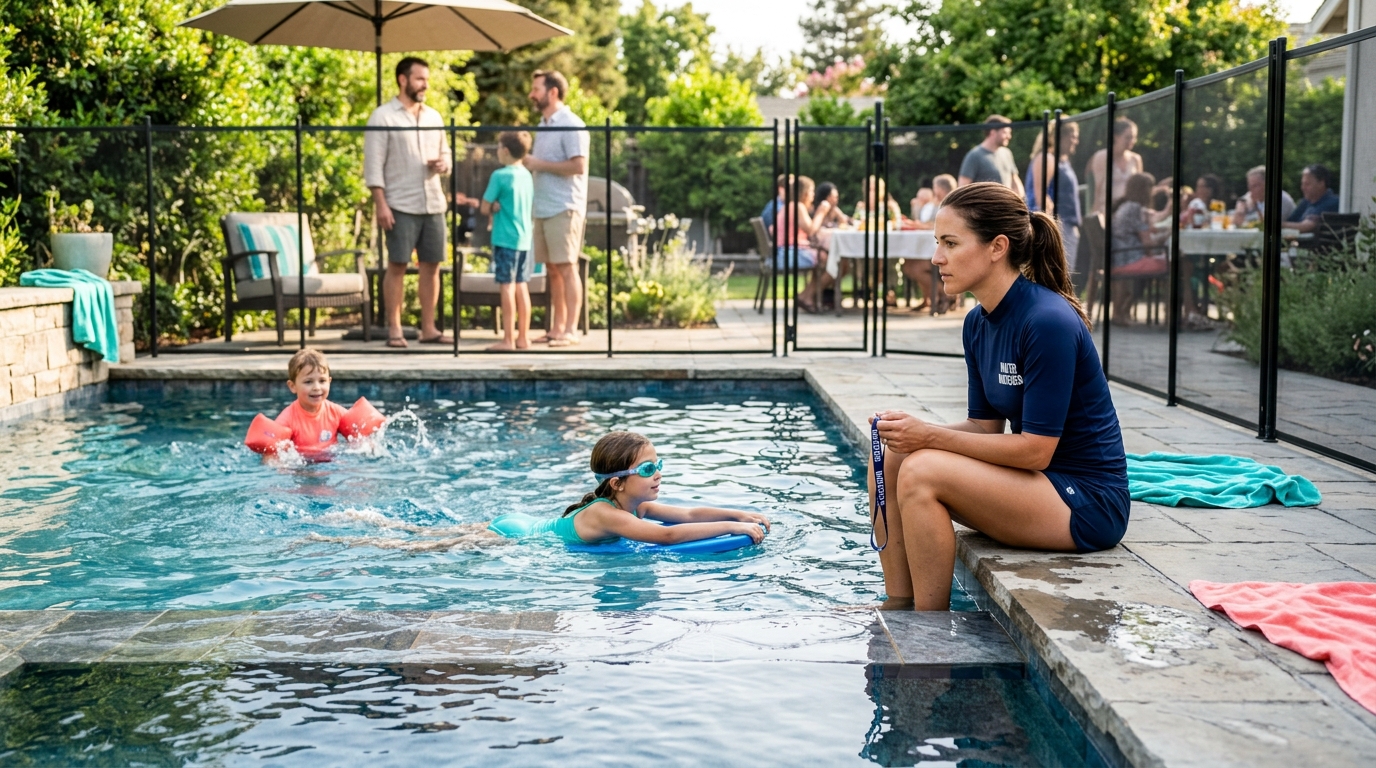
When children are in or around water, supervision should be active rather than casual. The supervising adult should be able to see the child, remain close enough to respond quickly, and stay focused on the water instead of dividing attention between phones, conversations, food preparation, or other tasks.
Drowning may not look like the dramatic struggling often shown in movies. A child in trouble may be unable to call for help, so families should not depend on splashing or shouting as a warning.
Assign a Water Watcher Instead of Assuming Everyone Is Watching
Large family gatherings can create a dangerous assumption: many adults are nearby, so someone must be watching. Choose one responsible adult to actively watch children for a defined period, then deliberately hand the responsibility to another adult. The water watcher should avoid alcohol and unnecessary distractions and know which children are under supervision.
For young children and weak swimmers, remain especially close. Swimming lessons can reduce drowning risk, but swimming ability does not make a child “drown-proof.” Tiredness, panic, deeper water, currents, or a sudden fall can change the situation quickly.
Bathtubs, Buckets, and Small Water Sources Count Too
Water safety is not only a pool-and-beach issue. CDC notes that drowning can occur in smaller bodies of water, including bathtubs and water-filled buckets. Babies and toddlers should never be left alone in a bath, even briefly.
Prepare everything you need before bath time. Drain the tub promptly afterward. Empty buckets, wading pools, coolers, and other water containers after use and store them where young children cannot climb into them or refill them unnoticed.
Bathrooms and laundry areas should also be included in your broader home safety checklist, especially once a toddler can open doors, climb, and move independently.
Barriers and Water Competency Reduce Unplanned Access
Many drowning incidents involving young children happen when swimming was not the planned activity. A child may leave the house through an unsecured door, enter a pool area unnoticed, or wander toward nearby water. Physical barriers create time for an adult to notice before a child reaches the water.
Use Four-Sided Pool Fencing With a Self-Closing, Self-Latching Gate
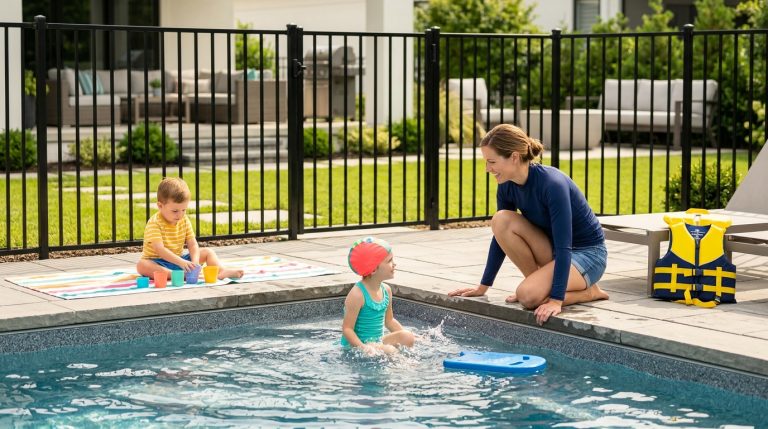
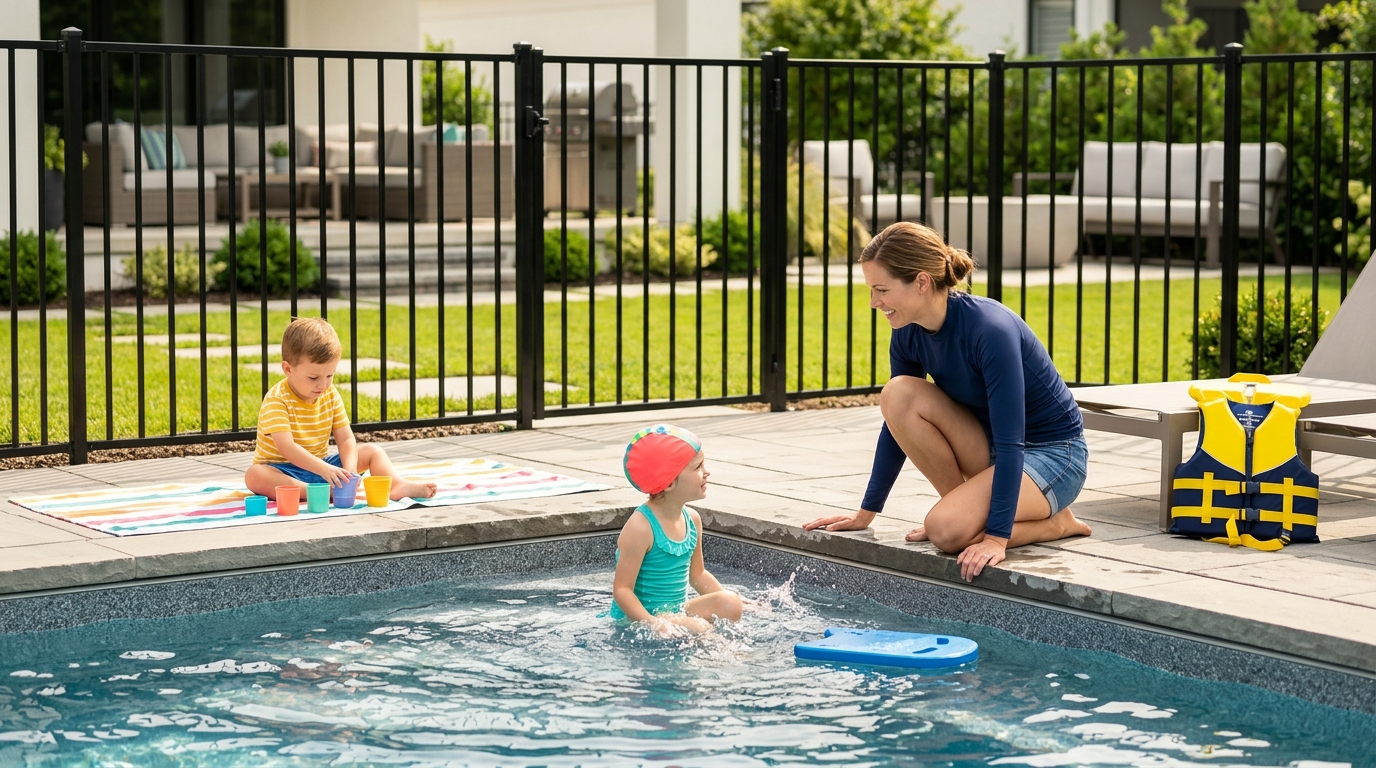
CDC and the American Academy of Pediatrics recommend four-sided pool fencing that separates the pool from the house and yard. The gate should self-close and self-latch, and the barrier should meet applicable local requirements.
Check gates regularly to make sure they close and latch without being pushed. Keep furniture and other climbable objects away from the fence. Remove toys from the pool area when swimming ends so children are not tempted to return for something they can see in the water.
If your family stays at a hotel, rental home, or relative’s house with a pool, inspect the barrier and exit points when you arrive instead of assuming the property is child-safe.
Swimming lessons add another layer. CDC says formal swimming lessons can reduce drowning risk among children and young adults, while the AAP recommends building water competency across the family. Lessons should be appropriate for the child’s age, development, comfort, and ability, but they never replace barriers or supervision.
A Parent Checklist for Pools, Beaches, Boats, and Everyday Water Safety
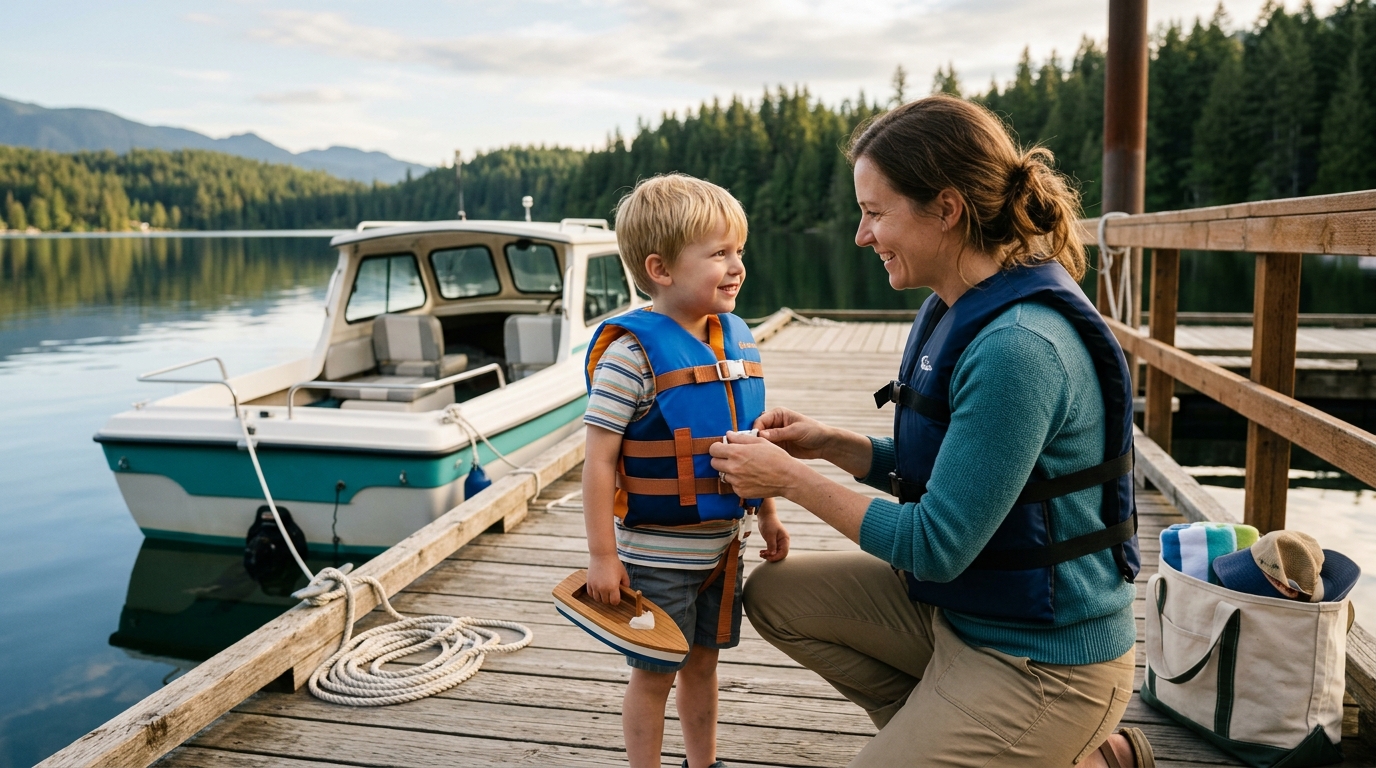
Different water settings create different hazards. A backyard pool may have a known depth and defined edge. A beach can add waves, currents, tides, and sudden drop-offs. Lakes and rivers may hide underwater hazards. Boats add movement, distance from shore, and the possibility of an unexpected fall into the water.
Before a water activity, take a few minutes to identify what is different about that environment and what additional protection your child needs.
Life Jackets, Natural Water, and Emergency Readiness Matter
The AAP recommends U.S. Coast Guard-approved life jackets for children whenever they are on motorized or nonmotorized watercraft. Young children and nonswimmers may also need properly fitted life jackets near or in natural water, depending on the activity and conditions.
Inflatable arm bands, neck floats, pool toys, and similar products should not be treated as substitutes for a life jacket. They may deflate, slip out of position, or create a false sense of security. Adults should model safe behavior by wearing life jackets when boating.
Choose a Properly Fitted Life Jacket and Prepare for Rescue
Choose a life jacket designed for the child’s weight and intended activity, and secure it according to the manufacturer’s instructions. A jacket that is too large can ride up around the face or allow a child to slip out; one that is too small may not provide the intended fit.
At beaches, lakes, and rivers, choose designated swimming areas with lifeguards when possible. Pay attention to posted warnings, weather, tides, waves, currents, and local conditions. Do not assume calm-looking water is automatically safe.
Parents and caregivers should also consider learning CPR and basic water-rescue skills. The AAP emphasizes early rescue and resuscitation because the first minutes of a drowning emergency are critical. Keep an appropriate reaching or throwing rescue device near pools, and have a way to call emergency services quickly.
Use this practical water-safety checklist before and during family activities:
- Identify one actively supervising adult when children are in or near water.
- Keep young children and weak swimmers within close supervision.
- Use a four-sided pool barrier with a working self-closing, self-latching gate.
- Remove pool toys after swimming and secure access points.
- Enroll children in age-appropriate swimming lessons when they are ready.
- Use properly fitted, U.S. Coast Guard-approved life jackets when boating and when otherwise appropriate.
- Do not use floaties or inflatable toys as substitutes for life jackets or supervision.
- Choose lifeguarded and designated swimming areas when possible.
- Check weather, waves, currents, tides, and local warnings before entering natural water.
- Empty bathtubs, buckets, wading pools, and other small water containers promptly after use.
- Keep rescue equipment and a way to call for help accessible.
- Teach older children that risky water behavior, breath-holding contests, and pushing others into water are not acceptable.
- Review the plan whenever you visit an unfamiliar pool, beach, lake, river, or vacation property.
For current national guidance, parents can review the CDC Drowning Prevention resources. CDC’s 2026 guidance emphasizes close supervision, swimming skills, proper pool fencing, and properly fitted life jackets as key prevention measures.
Water safety should also be part of family emergency planning. Our Emergency Prep Hub can help you think through emergency contacts, CPR training, rescue equipment, and what children should do when someone is in trouble. Younger families may also benefit from New Parent Start Here when reviewing bath, pool, and home access risks.
The goal is not to make children afraid of water. Swimming, boating, and beach days can be healthy and memorable parts of childhood. The goal is to make safety as normal as sunscreen, seat belts, and helmets.
Before every water activity, ask four questions: Who is actively watching? What prevents unsupervised access? Does the child have the skills and equipment needed for this setting? And are the adults prepared to respond if something goes wrong? When those questions become routine, families create multiple layers of protection without taking the joy out of being around water.