A parked vehicle can become dangerous for a child much faster than many people realize. Hot car incidents do not happen only during extreme heat waves, and they are not limited to parents intentionally leaving a child while running an errand. Children may be forgotten during a change in routine, accidentally left after falling asleep in the back seat, or become trapped after climbing into an unlocked vehicle on their own.
That is why hot car safety should be built into everyday family routines rather than treated as something to remember only on very hot days.
The National Highway Traffic Safety Administration continues to promote its “Stop. Look. Lock.” message because pediatric vehicular heatstroke remains a serious preventable risk. NHTSA reports that a child’s body temperature rises three to five times faster than an adult’s and that more than 1,000 children have died from heatstroke in vehicles over the past 25 years.
A practical hot car safety checklist can reduce opportunities for mistakes by making the safest action automatic: check the vehicle every time, never leave a child unattended, lock parked vehicles, and have backup systems when routines change.
This guide works alongside our Car Seat & Travel Safety hub and broader Child Safety Checklists.
Why Hot Cars Become Dangerous So Quickly for Children
A vehicle functions differently from an open outdoor space. Sunlight enters through the windows and heats interior surfaces such as seats, dashboards, and upholstery. That heat becomes trapped inside the enclosed vehicle, allowing the temperature to rise rapidly.
NHTSA says the temperature inside a vehicle can rise by almost 20 degrees Fahrenheit within the first 10 minutes. Dangerous conditions can develop even when the weather outside does not feel exceptionally hot.
Parking in the shade or cracking a window does not make leaving a child unattended safe. NHTSA has warned that heatstroke has occurred even when outside temperatures were around 60 degrees Fahrenheit.
Children Are More Vulnerable to Heat Than Adults
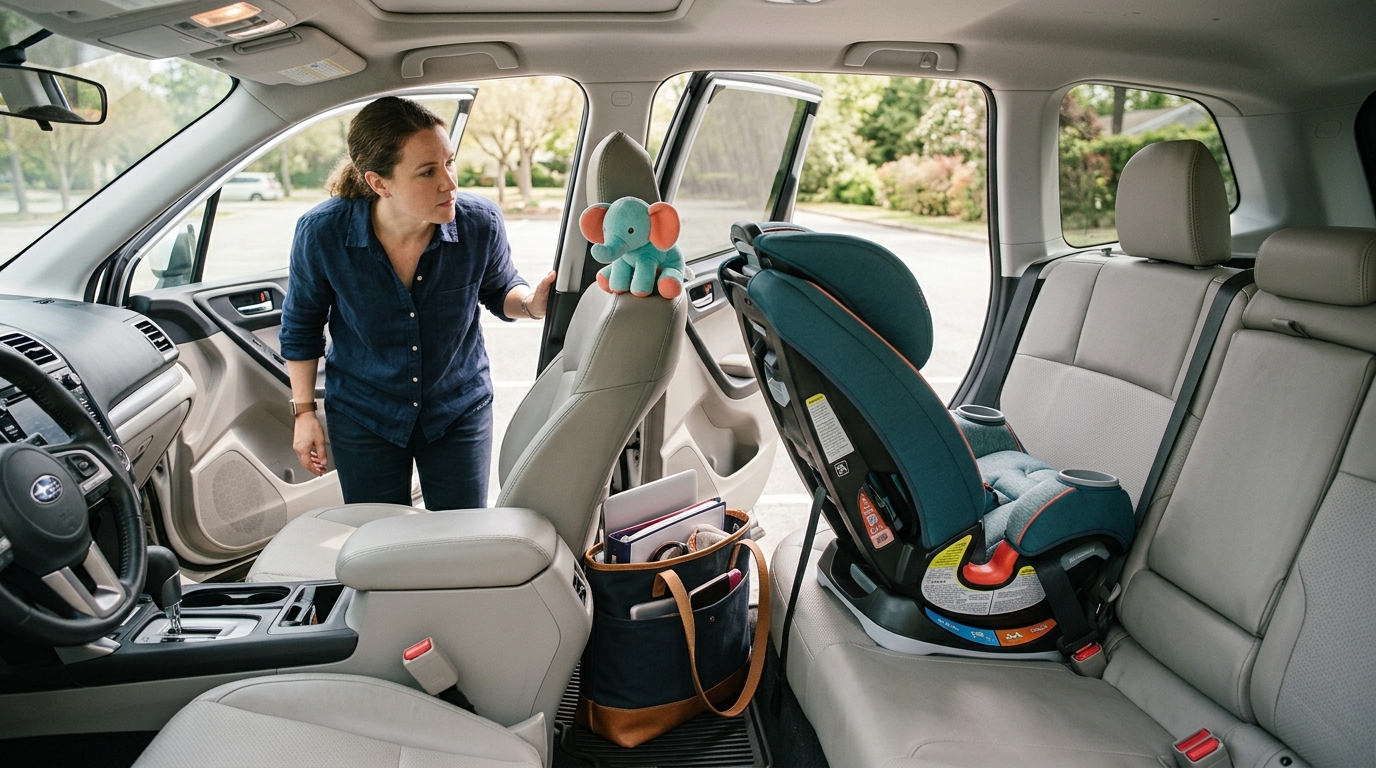
Young children regulate body temperature differently from adults. Their bodies can heat much faster, which means a situation that feels temporarily uncomfortable to an adult can become medically dangerous for a child.
Heatstroke begins when the body’s core temperature becomes dangerously elevated. NHTSA identifies approximately 104 degrees Fahrenheit as the point at which heatstroke begins, while a core temperature around 107 degrees can be fatal.
Parents should not use a child’s apparent comfort when they were first left in the vehicle as a measure of safety. Conditions can change quickly while an adult is inside a store, talking to someone, unloading groceries, or completing what was expected to be a short task.
Never Leave a Child in a Parked Vehicle “Just for a Minute”
One of the most important rules is also the simplest: never intentionally leave an infant or child alone in a parked vehicle, even for a quick errand.
A running air conditioner is not a substitute for adult supervision. Engines can stop, climate systems can malfunction, children can interfere with controls, or an adult can become delayed longer than expected.
If your plans require leaving the vehicle, bring the child with you or arrange for another responsible adult to remain with them. A sleeping child should not change that rule.
Changes in Routine Deserve Extra Attention
Many hot car prevention strategies focus on memory because ordinary routines can occasionally operate almost automatically. A different caregiver may handle daycare drop-off. A parent may drive directly to work instead of following the usual route. A quiet, rear-facing child may fall asleep in the back seat.
These situations are a strong reason to use physical and digital reminders instead of depending entirely on memory.
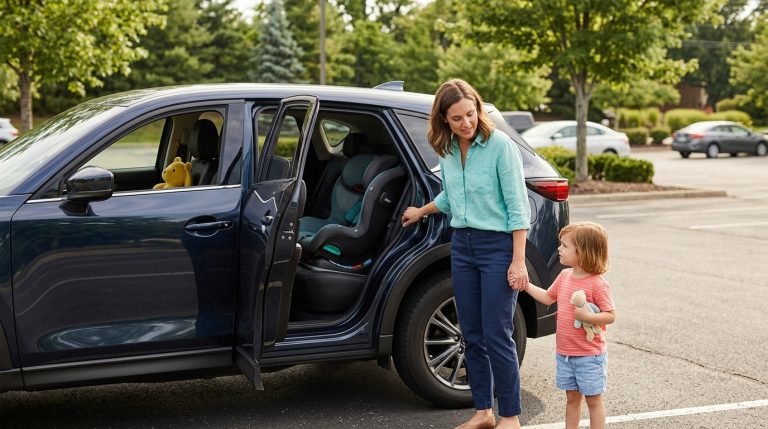
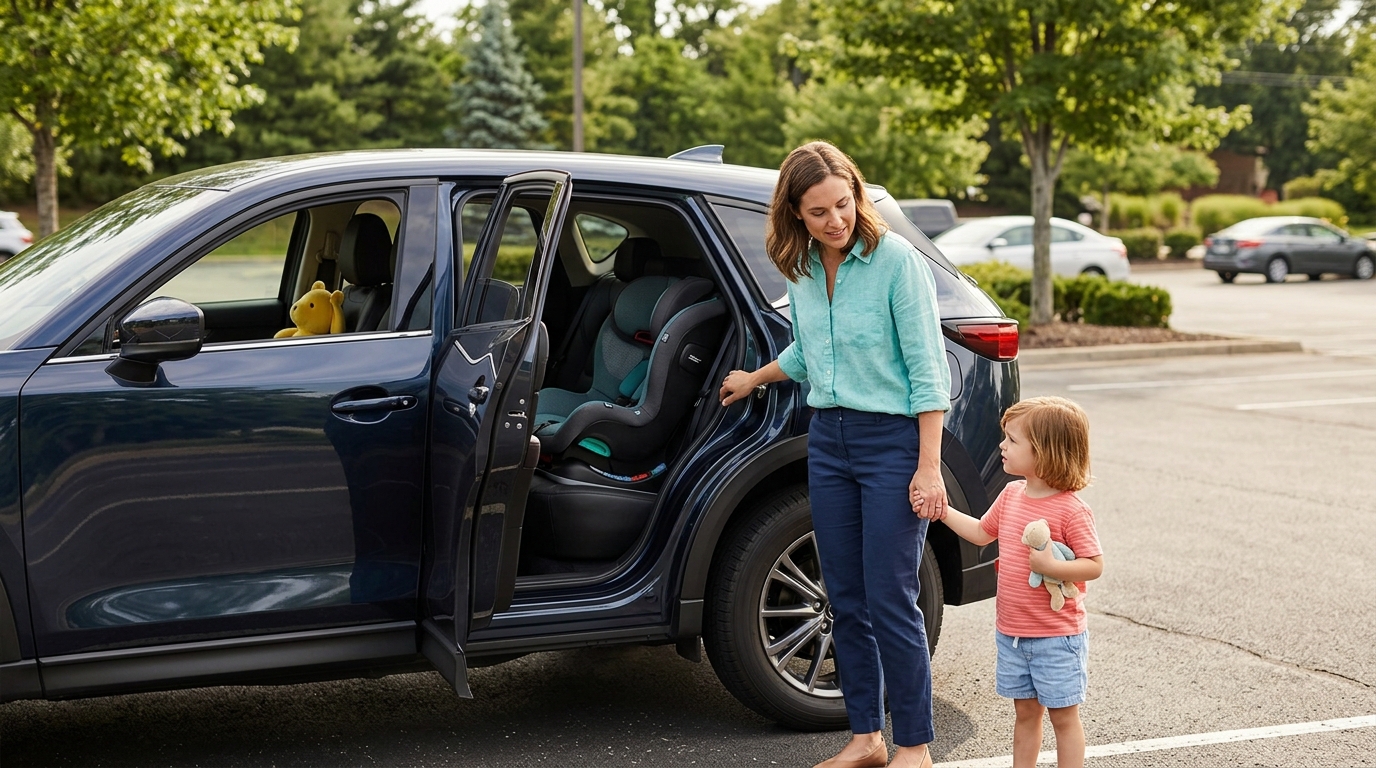
Place something you will need at your destination in the back seat near the child’s car seat, such as a work bag or another essential item that is safe to store there. NHTSA also suggests keeping a stuffed animal in an empty car seat, then moving it to the front seat when the child is riding as a visual reminder.
If your vehicle has a rear-seat reminder system, keep the feature enabled. Parents can also use phone reminders or coordinate with childcare providers. For example, ask the provider to call if the child does not arrive as expected.
This is especially useful during the school year when transportation schedules change. Our Back-to-School Safety Checklist includes additional ideas for pickup, drop-off, bus, and school transportation routines.
Children Can Also Become Trapped in Parked Cars
Not every hot car incident begins with an adult forgetting a child. Children may climb into an unlocked vehicle while playing and then be unable to get back out.
NHTSA says children gaining access to unattended vehicles account for a significant portion of pediatric vehicular heatstroke deaths. This means hot car prevention matters even in households where adults never transport young children.
A neighborhood child, visiting relative, or friend’s child could potentially enter an unlocked vehicle.
Lock Vehicles and Keep Keys Away From Children
Lock every parked vehicle, including vehicles sitting in a driveway or garage. Keep keys and remote-entry devices somewhere children cannot access them.
Teach children that cars, trunks, cargo areas, and parked vehicles are not play spaces. Do not encourage hide-and-seek games involving vehicles, even when an adult is nearby.
Parents should also check trunks and vehicle interiors when a young child is unexpectedly missing. Families can incorporate this rule into their broader Home Safety by Age routines, particularly during the toddler and preschool years when curiosity and climbing ability increase quickly.
When visiting grandparents, relatives, vacation homes, or unfamiliar properties, look at parked vehicles as part of the safety environment. A vehicle that normally stays unlocked because “nobody uses it” can still attract a curious child.
Build a Hot Car Prevention Routine Your Family Can Repeat
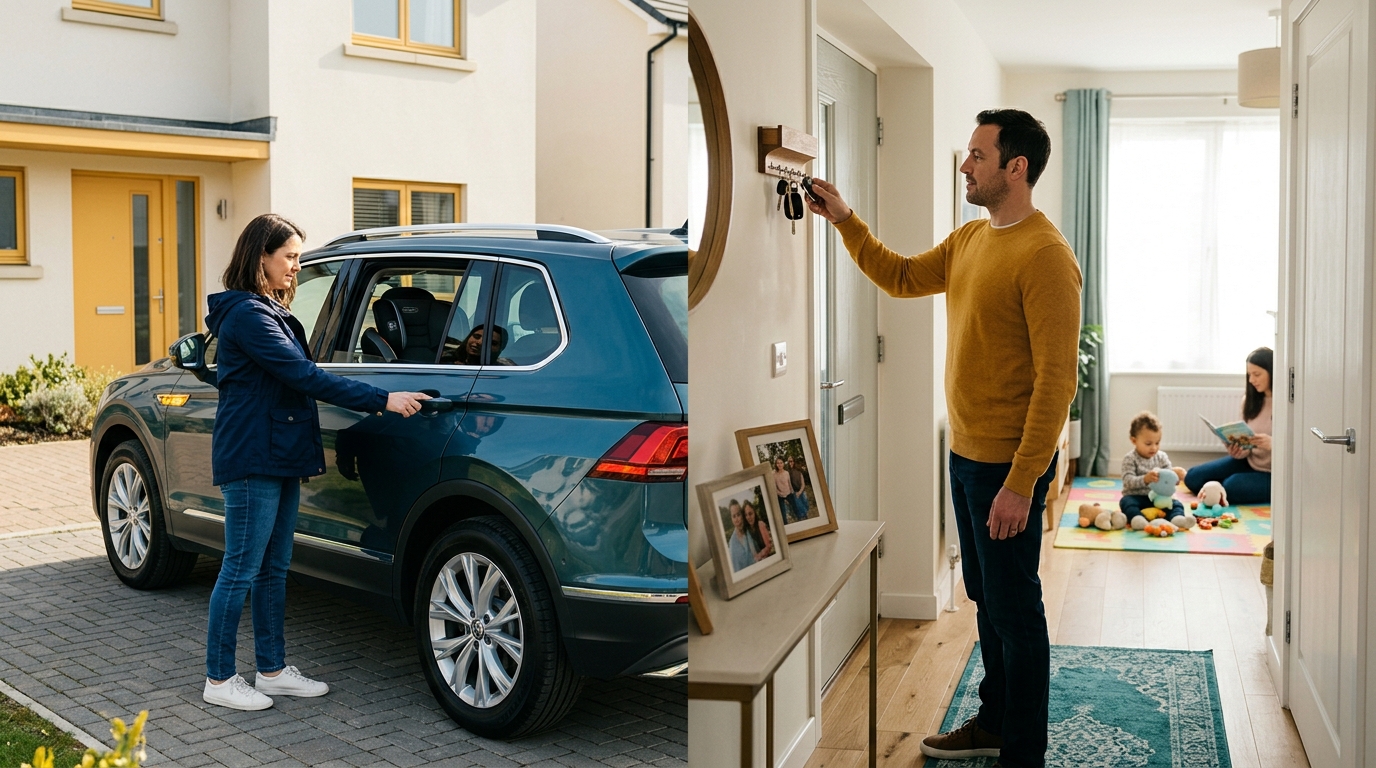
The strongest prevention plan is one that does not depend on someone remembering a long list during a stressful morning. Create a short routine and repeat it every time the vehicle is parked.
NHTSA summarizes the idea as “Stop. Look. Lock.” Stop after parking. Look through the front and back seats. Confirm every child has exited. Then lock the vehicle.
Parents can review current official recommendations at the NHTSA Child Heatstroke Prevention Center.
Use Multiple Layers of Prevention Instead of One Reminder
A strong hot car safety plan includes overlapping protections. If one reminder fails, another can still draw attention to the child or prevent an unattended child from entering the vehicle.
Use this practical checklist:
- Never leave an infant or child unattended inside a parked vehicle.
- Check every row of seats before closing and locking the vehicle.
- Use the same “Stop. Look. Lock.” routine on every trip.
- Place an essential destination item in the back seat when transporting a child.
- Use a stuffed animal or another visual reminder in the front seat.
- Keep rear-seat reminder technology enabled when available.
- Ask childcare providers to contact you if a child fails to arrive as scheduled.
- Lock parked cars and trunks even when they are inside a garage or driveway.
- Keep vehicle keys and remote-entry devices out of children’s reach.
- Teach children that vehicles are not play areas.
- Communicate clearly when another caregiver is responsible for drop-off.
- Slow down and double-check whenever the normal routine changes.
Families with infants and young children may also combine this checklist with their New Parent Start Here safety review.
Know What to Do If You See a Child Alone in a Hot Vehicle
A child alone in a hot vehicle should be taken seriously. If you see a child who appears distressed, unresponsive, or trapped in a hot vehicle, call 911 immediately and follow the dispatcher’s instructions.
Warning signs of serious heat illness can include hot or flushed skin, rapid breathing, unusual sleepiness, confusion, vomiting, weakness, seizures, or loss of consciousness. Do not delay emergency assistance while searching extensively for the parent or caregiver when the child appears to be in danger.
If another person is present, one adult may be able to contact emergency services and remain with the vehicle while another alerts nearby store or property staff. Follow instructions from emergency responders about getting access to the child and providing first aid.
Parents should also include extreme heat in their broader Emergency Prep Hub. Keep drinking water available during travel, plan around heat advisories, monitor children closely during summer outings, and avoid assuming the vehicle is safe simply because the air conditioning was recently running.
New vehicle technology may provide additional layers of protection, including rear-seat alerts and occupant-detection systems. These features can be useful, but technology should supplement rather than replace a physical back-seat check.
Hot car prevention is ultimately about building habits that work on ordinary days and unusual days alike. A rushed morning, sleeping child, schedule change, unexpected phone call, or different caregiver should not be enough to break the safety system.
Every time you park: stop, look through the entire vehicle, make sure every child is out, and lock the doors. It takes only a few seconds, but making those seconds automatic is one of the most important vehicle-safety habits a family can build.