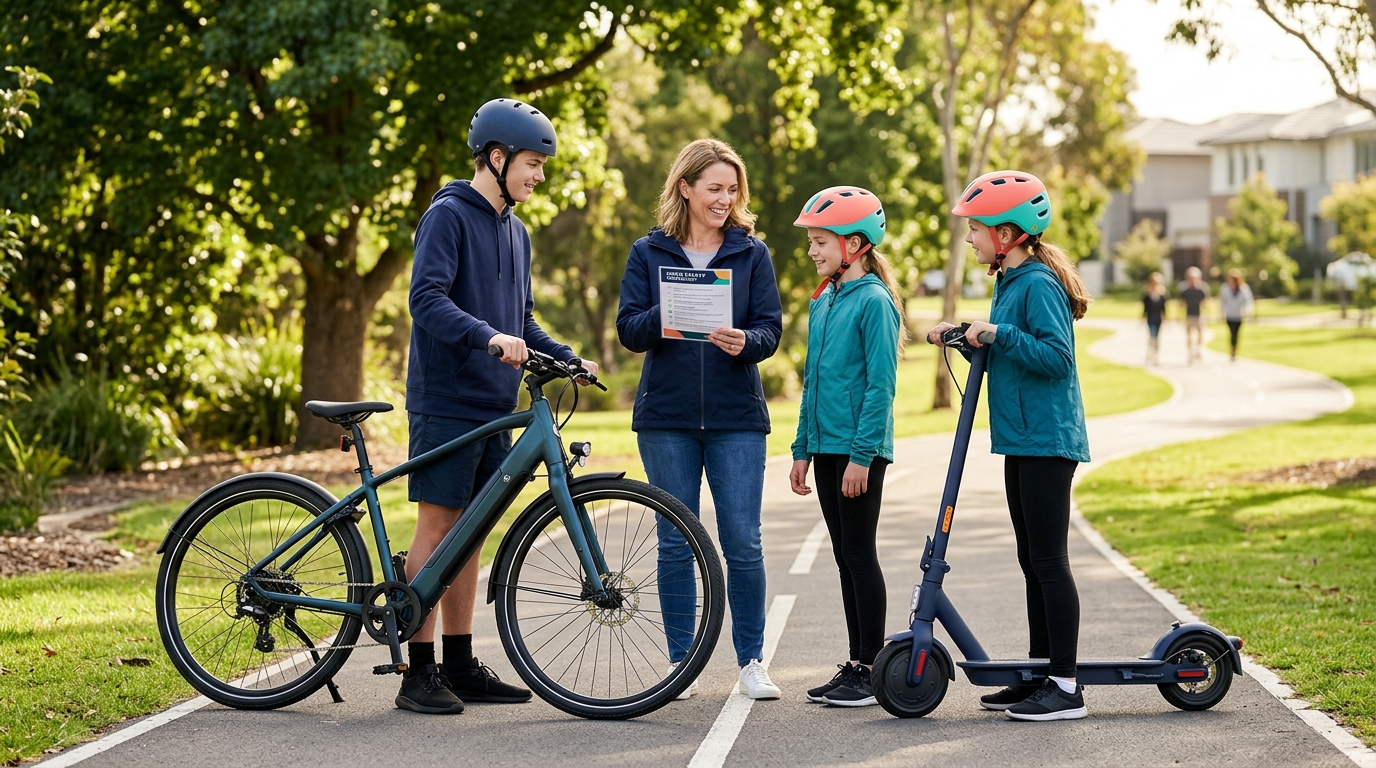
E-bikes and electric scooters have become a normal part of transportation and recreation for many families. Older children and teens may use them to travel to school, visit friends, get to activities, or simply ride around the neighborhood. They are convenient and fun, but adding a motor, battery, and potentially higher speed changes the safety equation compared with an ordinary bicycle or kick scooter.
That difference deserves more attention in 2026. The U.S. Consumer Product Safety Commission continues to report increasing emergency-room-treated injuries and deaths associated with micromobility products such as e-bikes, e-scooters, and hoverboards. Recent federal attention has also focused on lithium-ion battery fires and the safety of chargers, replacement batteries, and complete micromobility systems.
The goal is not to convince families that every e-bike or scooter is unsafe. It is to make sure the child, the device, the route, and the family’s rules are actually a good match.
Use this guide together with our Car Seat & Travel Safety resource, Child Safety Topics, and Child Safety Checklists to build a transportation routine that fits your child’s age and independence.
Why E-Bikes and E-Scooters Need Different Safety Rules
Parents sometimes approach an e-bike as simply a bicycle with a little assistance or an e-scooter as an upgraded kick scooter. In reality, electric assistance can allow riders to reach speed more quickly, travel farther, and enter traffic situations they may not yet have the judgment or experience to manage.
Device design also matters. E-scooters typically have smaller wheels than bicycles, which can make potholes, cracks, gravel, curbs, and uneven pavement more significant. E-bikes may be heavier than conventional bicycles and can behave differently during acceleration, braking, and turning.
Before allowing independent riding, parents should evaluate more than whether a child can physically operate the controls.
Speed Has to Match the Rider’s Skill and Judgment
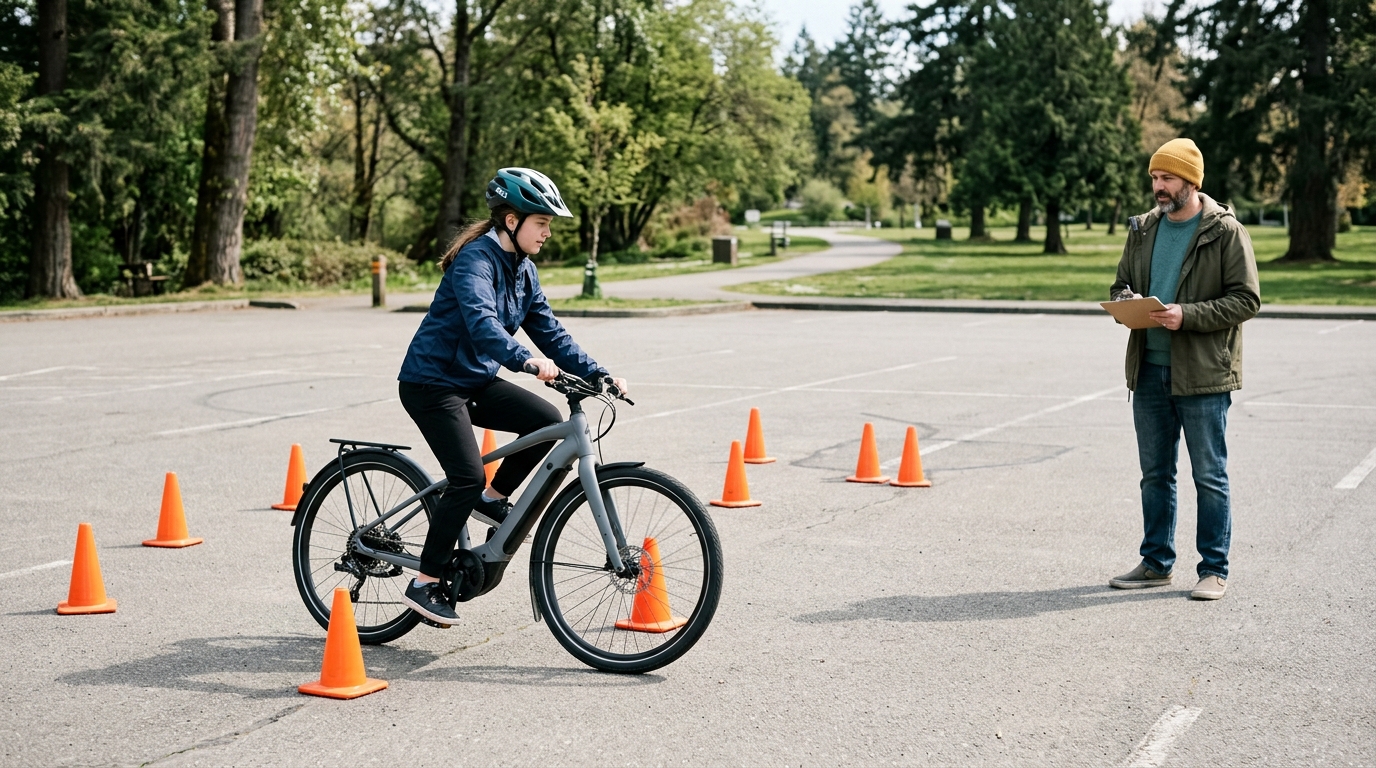
A child may learn to make an e-bike move within minutes. That does not mean the child is prepared to judge the speed of approaching traffic, anticipate a vehicle turning across a bike lane, control the device during emergency braking, or react appropriately when a pedestrian steps into the path.
Start in a large traffic-free area. The rider should demonstrate smooth starts, controlled stops, turns in both directions, scanning behind without losing control, obstacle avoidance, and predictable signaling before moving into a street environment.
Practice at low speeds first. Electric acceleration can surprise inexperienced riders, especially on heavier bikes. Make sure the child understands the different assistance or power settings and knows how to reduce power rather than automatically riding at the fastest available setting.
A Properly Fitted Helmet Should Be Non-Negotiable
Children and teens should wear an appropriate, properly fitted helmet every time they ride. NHTSA notes that bicycle helmets are important for reducing head injuries, and helmet use should be paired with education and proper fitting rather than treated as a box to check.
A helmet should sit level rather than tilted back, fit snugly, and be secured according to the helmet manufacturer’s directions. Replace a helmet after a significant impact or when the manufacturer recommends replacement.
Parents can improve compliance by wearing helmets themselves. A teenager is more likely to view a helmet as normal riding equipment when the adults riding with them follow the same rule.
Choose the Route Before Giving a Child Independence
Being capable of riding around a quiet cul-de-sac does not automatically mean a child is ready for a busy school commute.
Ride the proposed route together. Look for high-speed intersections, driveways, parked cars blocking visibility, construction, railroad crossings, steep hills, narrow shoulders, poor lighting, and sections without protected bicycle infrastructure.
Talk through specific scenarios rather than giving vague instructions to “watch for cars.” Ask what the rider would do if a car door opened, a vehicle began turning across the route, a pedestrian entered the path, or debris appeared suddenly.
E-scooter riders should pay particular attention to surface conditions. CPSC warns that their small tires can be disrupted by objects and uneven pavement. Riders should keep both hands on the handlebars and avoid hanging bags or other objects from them.
Battery and Charging Safety Matter as Much as Riding Safety
The riding hazard ends when the device is parked, but the battery hazard does not.
Most modern e-bikes and e-scooters use rechargeable lithium-ion batteries. These batteries can store substantial energy in a compact package. When a battery, charger, wiring system, or cell is defective, damaged, incompatible, or improperly used, the result can include overheating, thermal runaway, fire, or explosion.
CPSC has repeatedly warned about micromobility battery fires. In June 2026, the Commission approved publication of a proposed mandatory safety standard addressing lithium-ion batteries used in micromobility products. The proposal specifically responds to hazards including fires, explosions, and thermal runaway.
Families should therefore consider electrical safety part of the purchase decision rather than something to think about only after a problem occurs.
Charge the Device Where an Adult Can Monitor It
Follow the device manufacturer’s charging instructions and use only the charger supplied with or specifically recommended for the device. CPSC advises consumers to remain present while charging micromobility products and not to charge them while sleeping or when nobody is home.
Unplug the device when charging is complete. Avoid using generic or so-called universal chargers simply because the connector fits. A physically compatible plug does not guarantee that voltage, current, battery-management communication, or other characteristics are correct for the battery.
Replacement batteries deserve the same caution. Use battery packs that the device manufacturer has confirmed are appropriate for that model.
Stop using a battery or charger if you notice concerning changes such as unusual heat, swelling, leaking, a strange odor, smoke, damaged wiring, or physical impact damage. Do not attempt improvised battery repairs. Follow manufacturer and local hazardous-waste guidance for damaged or recalled batteries.
For current federal micromobility recommendations, parents should review the official U.S. Consumer Product Safety Commission micromobility safety guidance.
A Family E-Bike and E-Scooter Safety Checklist
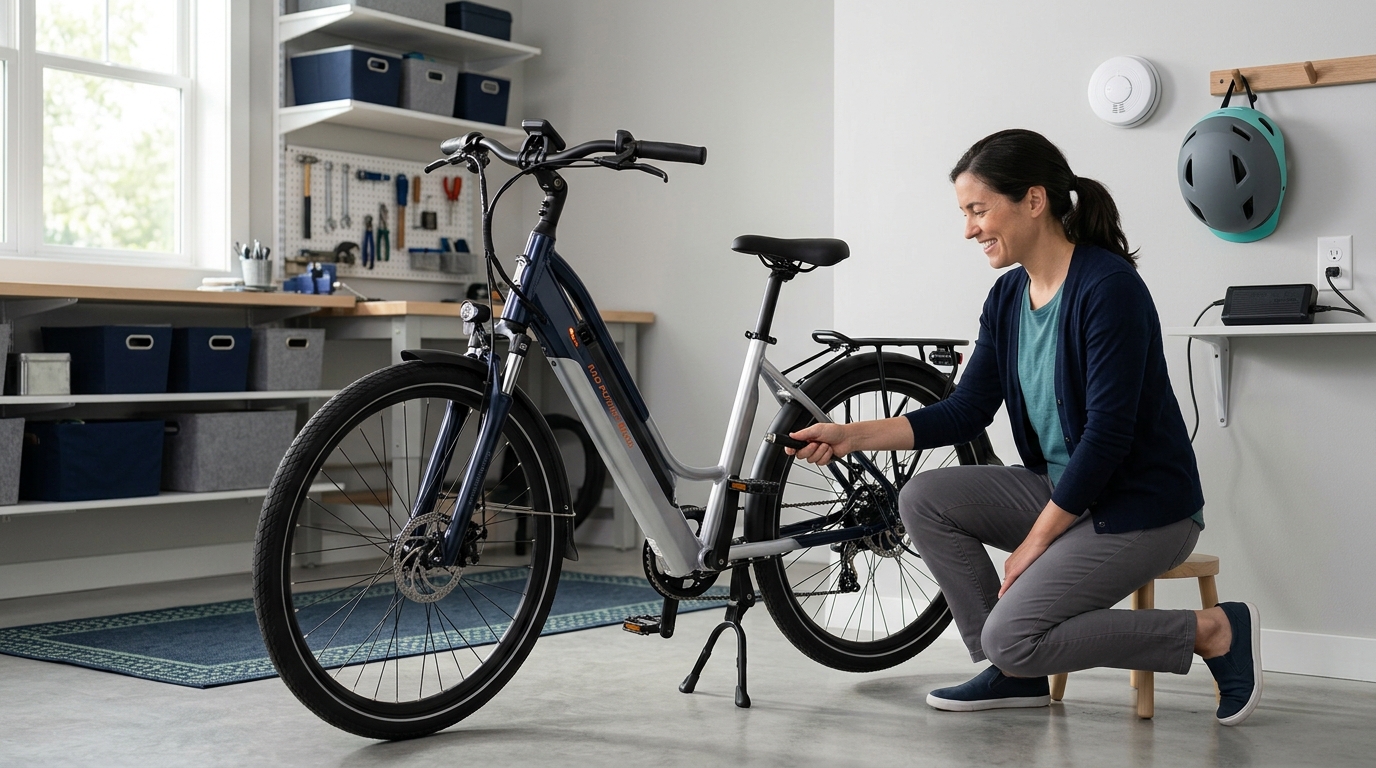
Buying the device should not be the moment a family’s safety planning ends. Treat an e-bike or scooter more like a transportation tool than a toy, especially when a child will use it independently.
The first question should be whether the device is appropriate for the child’s age, size, maturity, and riding environment. Review the manufacturer’s age and weight recommendations, maximum speed, controls, braking system, battery instructions, and intended use.
Next, confirm the laws that apply where the child will ride. E-bike classifications, helmet requirements, minimum rider ages, passenger restrictions, sidewalk rules, and permitted riding locations can differ between states and local jurisdictions.
Use a Short Pre-Ride Check Every Time
A quick inspection can catch problems before a child is already moving at speed. The routine does not need to be complicated. Teach the rider to look at the device before every trip rather than assuming yesterday’s condition is today’s condition.
- Check tire pressure and look for visible tire damage.
- Test both brakes before entering traffic.
- Confirm handlebars, wheels, and folding mechanisms feel secure.
- Make sure lights and reflectors work when riding in reduced visibility.
- Check the battery is properly secured to the device.
- Look for damaged wires, connectors, or battery housings.
- Wear a correctly fitted helmet.
- Wear visible clothing appropriate for the route and conditions.
- Keep both hands available for controlling the handlebars.
- Do not carry passengers on a device designed for one rider.
- Put the phone away while the device is moving.
- Review weather and route conditions before leaving.
CPSC specifically advises one rider per e-scooter because additional riders can increase the likelihood and severity of a collision. Families should also follow the manufacturer’s passenger and load limitations for e-bikes.
Set Rules Based on Age, Maturity, and Local Law
The right level of independence will vary. A younger rider may only be allowed to use an electric device with an adult on low-traffic routes. An older teen may eventually ride independently after demonstrating consistent judgment and understanding traffic rules.
Our Home Safety by Age framework applies here too: independence should expand when a child demonstrates skills, not simply when a birthday arrives.
Create clear rules about where the device may be ridden, whether night riding is allowed, which roads are off limits, whether friends may borrow it, what happens during bad weather, and where the device will be charged.
Also discuss peer pressure. A rider may behave responsibly alone but take greater risks around friends. Prohibit stunts, racing in traffic, riding while distracted, towing another person, holding onto moving vehicles, or overriding speed and battery safety systems.
safety warnings
Parents should periodically check for product recalls and safety warnings. CPSC issued several e-bike warnings during 2026 involving issues such as battery fires, wheel detachment, reflectors, and other crash hazards. If a product is recalled or the government advises consumers to stop using it, do not continue riding simply because the device appears to be functioning normally.
Families can also incorporate the device into their Emergency Prep routine. Make sure older children know whom to call after a crash, what to do if a battery is damaged, and that a smoking or burning lithium-ion battery is not something they should try to carry through the house.
E-bikes and e-scooters can give older children useful independence. They can make school commutes easier, encourage time outdoors, and provide another transportation option. But the benefits are strongest when independence grows alongside skill and responsibility.
Before handing over the handlebars, check four things: the rider is ready, the route is appropriate, the device is mechanically sound, and the battery is being charged safely. Then review those rules regularly instead of assuming one safety talk will last forever.