A practical Halloween safety checklist 2026 can help families enjoy trick-or-treating without turning the night into a list of worries. Halloween brings costumes, candy, dark streets, excited children, decorations, traffic, and unfamiliar routines together at the same time.
Most families do not need complicated rules. A few simple checks before leaving home can reduce common risks from falls, traffic, fire, choking, food allergies, and getting separated from the group.
The American Academy of Pediatrics updated its Halloween safety guidance in September 2026. Its recommendations focus on costume fit, visibility, safer street crossing, adult supervision, food safety, and age-appropriate planning.
NHTSA also reminds drivers that Halloween brings more pedestrians into neighborhoods. Children may move unpredictably, especially around parked cars, driveways, and intersections.
Use this guide before October 31, then adjust it for your child’s age, neighborhood, weather, and level of independence.
Halloween Safety Checklist 2026 Before Trick-or-Treating Begins
The safest Halloween routine starts before sunset.
Parents should look at the costume, walking route, supervision plan, weather, and timing before children become excited to leave. Fixing a dragging cape is easier at home than on a dark sidewalk.
Young children should stay with a responsible adult. Older children who are ready for more independence should travel with a group and have a clear route, return time, and communication plan.
Do not rely only on a phone. Batteries die, signals fail, and children can become distracted. Make sure they also know their home address, a trusted adult’s contact information, and what to do if the group becomes separated.
Choose a Costume That Lets Your Child See, Walk and Be Seen
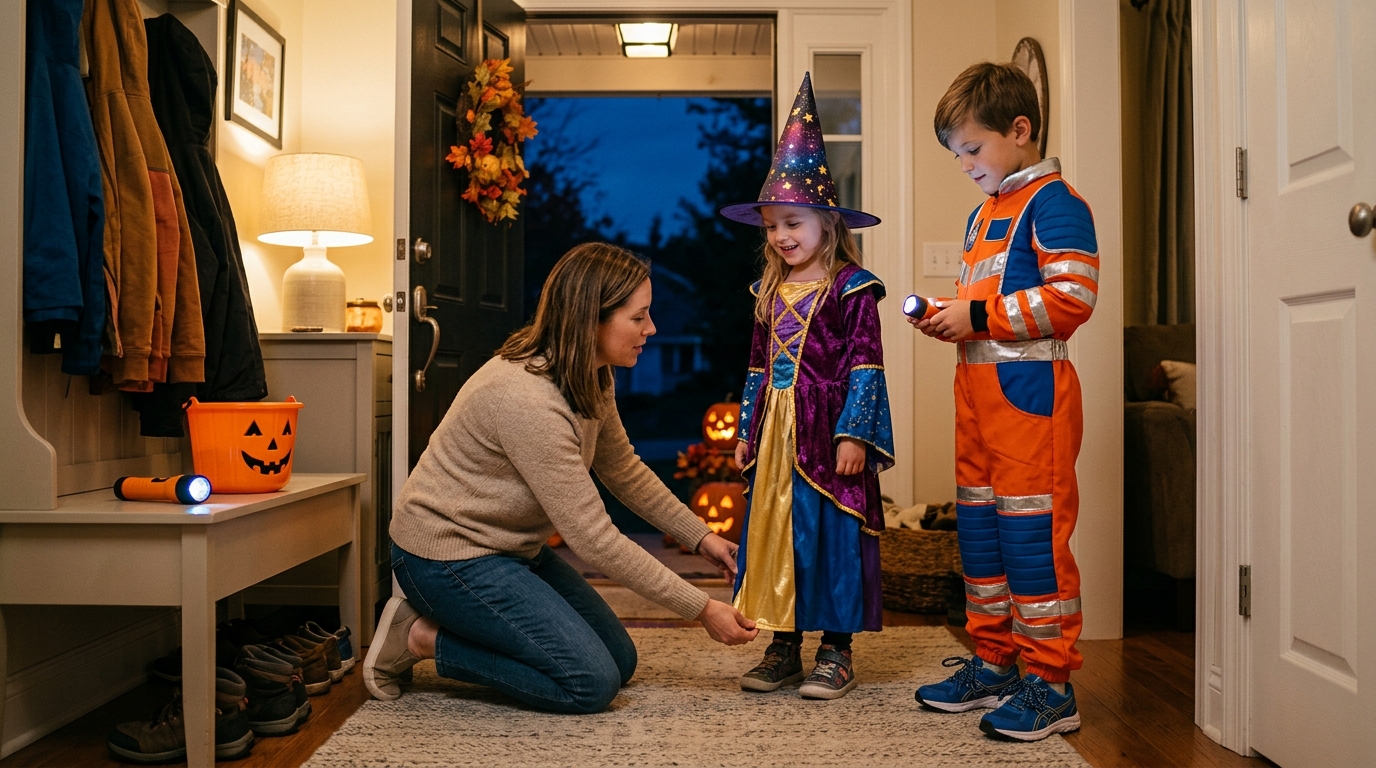
A costume can look great and still create a safety problem.
Start with fit. Hemlines, capes, robes, and other parts should stay clear of the child’s feet. Shoes should fit well enough for several blocks of walking.
Large hats and masks also deserve attention. A child needs a clear field of vision when stepping off a curb, using stairs, or walking through a crowded porch area.
The American Academy of Pediatrics suggests considering non-toxic makeup and decorative hats instead of masks that block vision. Makeup should be tested on a small area of skin before Halloween.
Check Fit, Visibility and Flame Resistance
Try the entire costume on before Halloween night. Ask your child to walk, turn, sit, climb a step, and look both ways while wearing it.
If fabric drags on the ground, shorten or secure it. Remove accessories that make normal movement difficult.
Next, think about visibility.
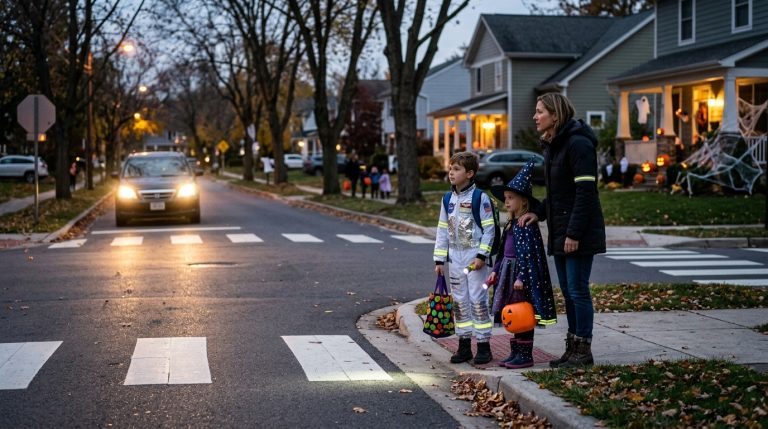
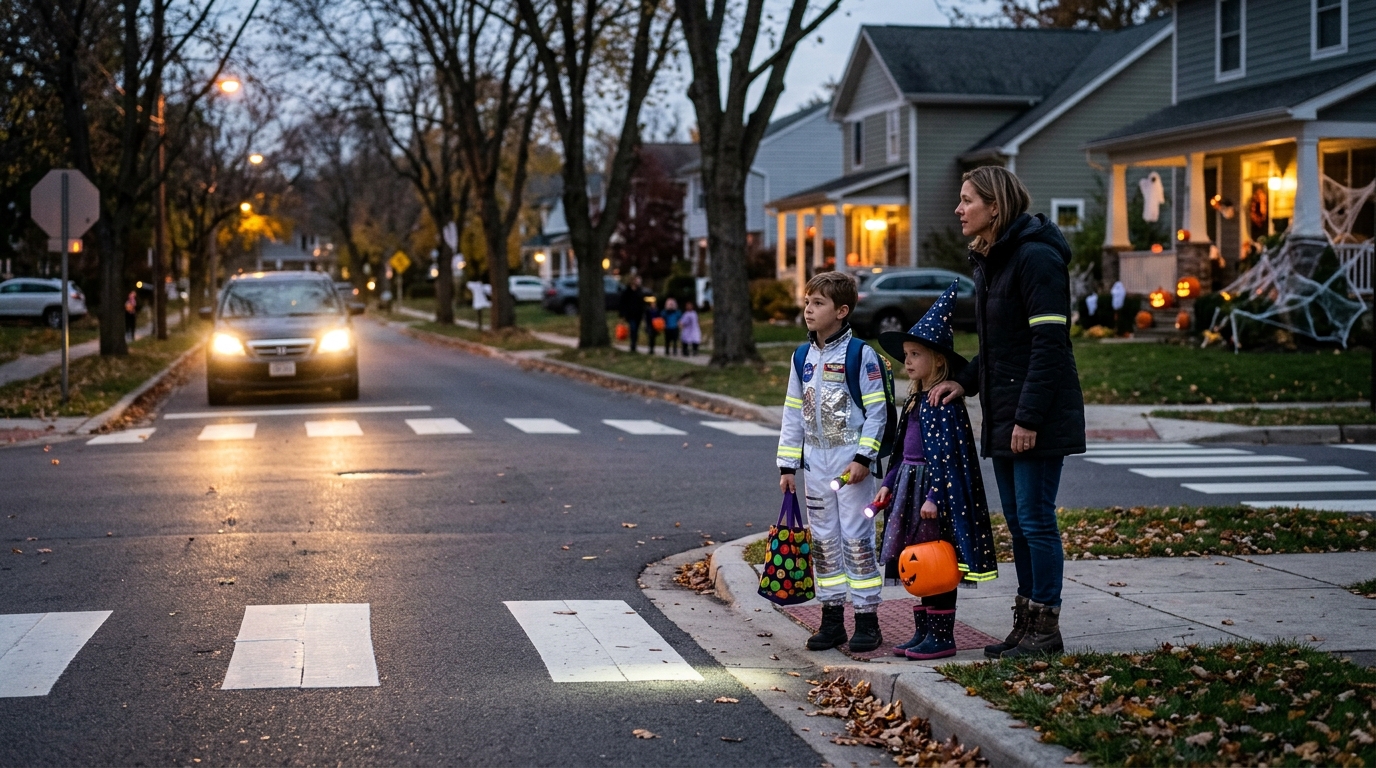
Dark costumes can be difficult for drivers to see after sunset. Add reflective tape or reflective details to the costume and treat bag. A flashlight or glow stick can provide another layer of visibility.
Bright elements are useful even if the costume itself needs to stay dark for the character.
Parents should also check costume labels. U.S. Consumer Product Safety Commission guidance recommends flame-resistant costumes and accessories. Flame resistance does not mean an item cannot burn, so children should still stay away from candles and other open flames.
Battery-operated lights are a better option for jack-o’-lanterns in areas where children will be walking.
Avoid Props and Accessories That Create New Hazards
Swords, sticks, canes, and similar accessories should be soft and flexible. Long or rigid props can cause injuries if a child trips.
Masks should not block breathing or peripheral vision. Check the eye openings while the child is moving rather than only while standing still.
Decorative contact lenses need special caution. The American Academy of Pediatrics advises against using them without an eye examination and prescription from an eye-care professional.
Even products marketed as cosmetic or one-size-fits-all can injure the eye when they do not fit correctly.
Small electronic costume accessories also deserve a quick check. If a decoration uses button batteries, make sure the battery compartment closes securely and children cannot easily open it.
Our button battery and high-powered magnet safety guide explains why loose button cells can be especially dangerous for young children.
Plan the Trick-or-Treat Route Before Children Reach the Street
Choose familiar streets when possible. Look for sidewalks, working streetlights, predictable crossings, and homes where children do not need to cross busy roads repeatedly.
Walk younger children throughout the route.
For older children, review the route before they leave. Agree on which streets are allowed and when they need to return.
Encourage a buddy system. Children should stay with their group instead of separating to reach a house first.
Phones should stay away while crossing streets. Music and headphones can also reduce awareness of traffic.
Cross at Intersections and Keep Watching for Turning Cars
Teach children to stop before entering the road and look carefully in every direction.
Use a crosswalk or intersection when one is available. Avoid stepping into traffic between parked vehicles because drivers may not see a smaller child until very late.
Even at a crosswalk, children should continue watching traffic. A green signal does not guarantee every driver has noticed them.
Turning vehicles deserve special attention. Look for cars entering or leaving driveways, alleys, parking lots, and intersections.
NHTSA advises drivers to slow down and scan constantly during Halloween. Parents who drive that evening should follow the same rule, even after their own children finish trick-or-treating.
Teen drivers need an extra reminder. Halloween combines darkness, more pedestrians, costumes that can reduce visibility, and excited younger children.
If your teen is driving, review the route and set clear rules about speed, passengers, phones, and distractions.
Our Back-to-School Safety Checklist includes more guidance on walking routes, crossings, transportation habits, and helping children build safer street awareness.
Candy, Home and Emergency Safety After the Walk Begins
Street safety is only one part of Halloween.
Candy can create choking or allergy risks. Decorations can create fire or fall hazards. Pets may react differently when strangers in costumes arrive repeatedly at the door.
A simple home check can prevent many of these problems.
Clear toys, hoses, garden equipment, wet leaves, and other obstacles from walkways before trick-or-treaters arrive.
Replace burned-out porch lights. Keep pets secured away from the front door if they may jump, escape, or become frightened by costumes.
Use flameless candles when possible. If an open flame is used, place it far from walking paths, curtains, costumes, and other materials that could ignite.
Check Treats With Your Child Before Eating Begins
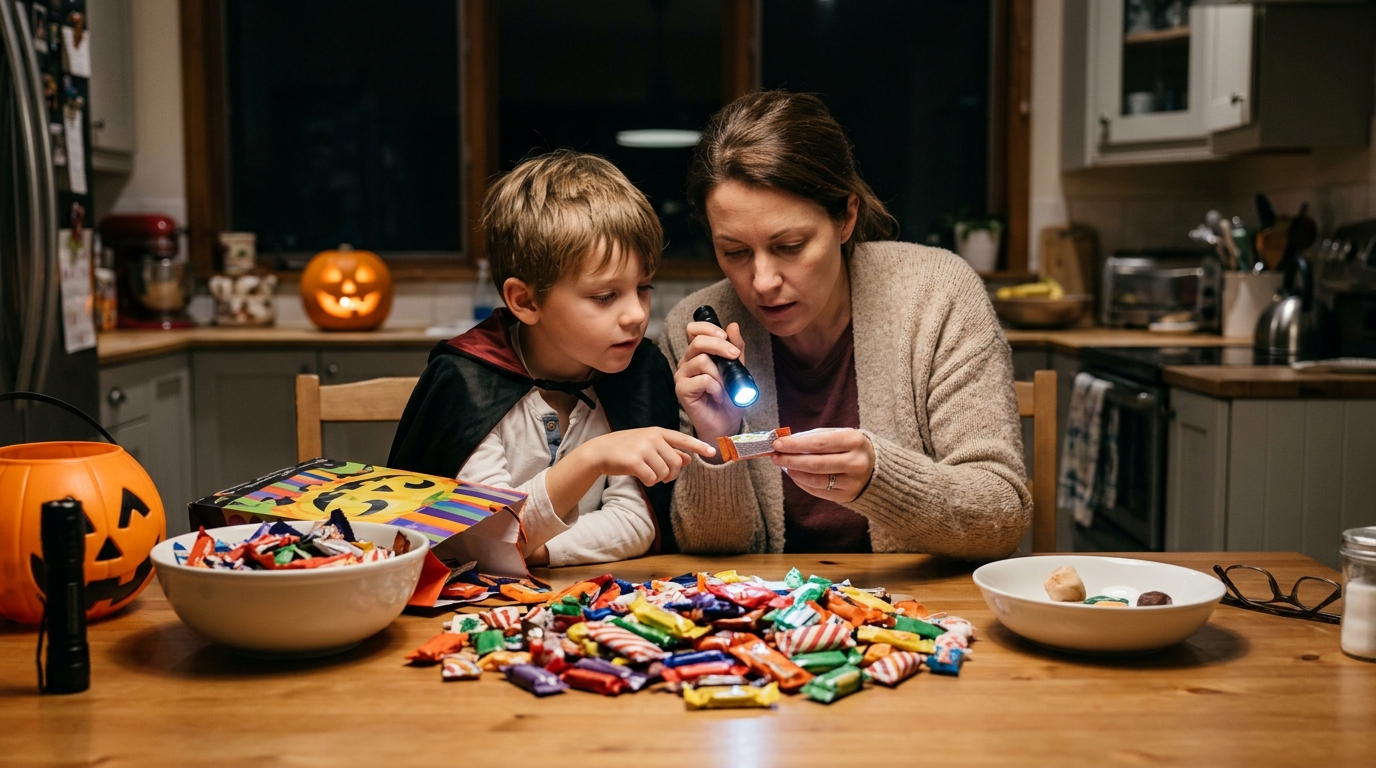
Children may want to start eating candy while walking. For young children, it is safer to wait until the family reaches a stable place where an adult can check the treats.
Look at packaging and remove anything that appears open, damaged, or unsuitable for the child’s age.
Choking risk matters most for younger children.
The American Academy of Pediatrics advises that babies and toddlers should not have items such as hard candy, gum, popcorn, gummy candy, whole nuts, pumpkin seeds, or similar choking hazards.
Wrappers, stickers, and small toys can also become hazards when young children put them in their mouths.
Food Allergies, Choking and Home Hazards Need Separate Checks
A child with a food allergy needs more than a quick look at the candy wrapper.
Read ingredient labels every time. Do not assume a miniature Halloween version of a familiar product has exactly the same ingredients as the regular size.
If a label is missing or the ingredients are uncertain, choose another treat.
Families can also prepare safe candy or non-food items at home so a child can exchange treats they cannot eat.
Children with prescribed emergency allergy medication should have it available according to their individual medical plan. Parents should follow the child’s healthcare guidance rather than relying on general online advice.
At home, check decorations again once the evening becomes busy. Keep electrical cords out of walking paths. Avoid overloaded outlets and damaged light strings.
If decorations or toys use coin or button batteries, confirm the battery compartment remains secure after handling.
Families can use our Child Safety Checklists hub to review additional home, travel, emergency, and age-specific risks after seasonal routines change.
Finally, teach children what to do if something unexpected happens.
Young children should know to stay with their adult. Older children should know which trusted adult to call, where the group plans to meet, and how to contact emergency services when there is a true emergency.
Children should never enter a stranger’s home or vehicle to receive a treat. They should stay with their group and ask a trusted adult for help if a situation feels wrong or confusing.
The goal of a Halloween safety checklist 2026 is not to make Halloween feel dangerous. It is to remove predictable problems before they compete with a child’s excitement.
Start with a costume that fits. Add visibility for the walk. Choose a route with safer crossings. Keep phones away while crossing streets. Match supervision to the child’s age and maturity.
Then check candy, allergies, decorations, pets, and home walkways.
Parents should also model the same habits they expect from children. Drive slowly in neighborhoods, stop before using a phone, follow crossings, and stay alert around driveways and parked vehicles.
A short review before October 31 can make the whole evening easier.
For current pediatric guidance, review the American Academy of Pediatrics Halloween safety guidance. For traffic safety, see the NHTSA Halloween Safety Tips.
Safety note: This guide provides general educational information. Follow current product instructions, local laws, emergency guidance, and your child’s healthcare advice when those are more specific.